+86-7996790781 office@chemshun.com
- Product Name
- Product Keyword
- Product Model
- Product Summary
- Product Description
- Multi Field Search
Views: 13 Author: Pingxiang Chemshun Ceramics Co.,Ltd Publish Time: 2026-03-26 Origin: Pingxiang Chemshun Ceramics Co.,Ltd


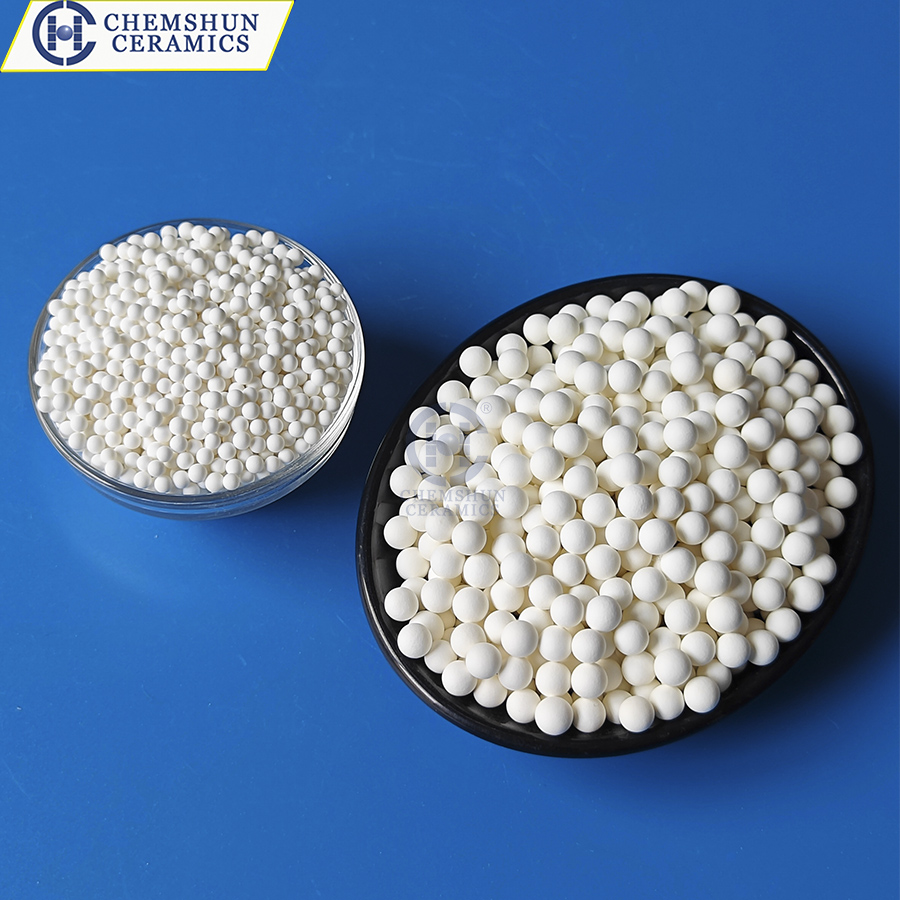
High alumina ceramic balls are precision ceramic grinding media manufactured from α-alumina (Al₂O₃) as the primary raw material through high-temperature calcination. Typical alumina contents are 92%, 95%, or 99%, corresponding to density ranges of 3.60–3.90 g/cm³ and water absorption below 0.01%. Their dense crystalline structure yields a Vickers hardness (HV) of 1300–1500, imparting excellent wear resistance and chemical stability.
In terms of grinding efficiency and energy consumption control, the wear rate of high alumina ceramic balls is typically ≤0.01‰ (calculated per ton of material per hour), significantly lower than that of natural pebbles and conventional zirconium silicate balls. Their low self-wear also effectively reduces iron contamination during the grinding process, making them suitable for powder processing applications with strict requirements for color and purity.
These products are widely used in wet and dry ball milling processes across industries such as non-metallic minerals, coatings, ceramic glazes, electronic materials, and new energy materials. Depending on equipment type and material characteristics, common specifications range from 0.5 mm to 70 mm in diameter, with supporting products including high alumina liners and bricks to enable comprehensive wear optimization of the grinding system.
When selecting the appropriate media, parameters such as material hardness, feed particle size, target fineness, and mill rotational speed must be comprehensively considered. Proper filling volume, gradation ratio, and replenishment regimen can increase grinding efficiency by 15%–30% while reducing media consumption per unit of product. It is recommended that users conduct laboratory or pilot-scale tests based on actual operating conditions to determine the optimal process solution.